An adult male who is 5’ 8” tall and weighs 205 lbs. has a BMI (Body Mass Index) of over 31 and is considered morbidly obese. If he gains another 10 lbs. over a year, his BMI goes up to 33. Terrible!
Unless he is R.J. Harvey, the running back for the Denver Broncos. His body fat is 8% compared to the average American male whose body fat is around 20%.
The BMI is not, by itself, a good measure of one’s health.
I have been thinking lately about the GDP and how it grows.
The GDP (Gross Domestic Product) measures the monetary value of goods and services bought by the final user over a given period of time.
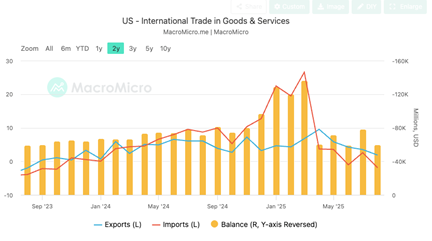
Generally, increases in the GDP are positive; they indicate an expansion of the economy and more money accumulated by businesses and people. However, this number can be misleading. Let’s consider what happens when tariffs are imposed on our economy. Tariffs are taxes collected at the border on imported goods and are paid by the importing company. The net result is an increase in the cost of goods for those companies that import and then sell products from countries whose imports are taxed with tariffs.
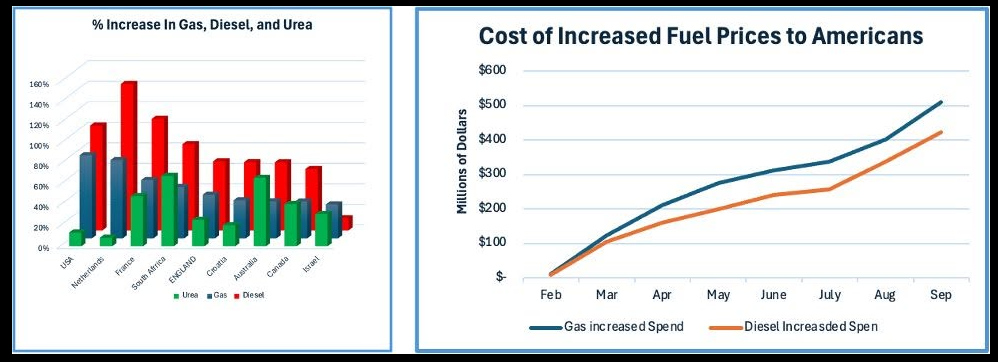
In this respect tariffs are no different than any other factor that raises the cost of goods. If paper prices rise, box costs rise; if plastic prices rise, parts prices rise; if energy prices rise, production costs rise. Anything that raises the costs of goods requires companies to decide on how they will adjust their business models. Timing becomes critical. If you believe that the increased costs in cartons, parts, or energy are temporary, you can plan your business accordingly. Sometimes you can hedge those costs by purchasing futures on those items, buffering changes. But tariffs are different. It is far more difficult to predict that the tariffs will remain constant, increase or decrease over time.
Let’s look at a model company and how their sales, pricing, profits, and contribution to the GDP are affected by tariffs on their imported goods.
We will consider a widget retailer, Widgets-R-Us, who pays $1.00 for an imported item that they then sell to the public for $2.00. (These numbers are for illustration only, but the math here applies whether the price is $1.00 or $1,000, and whether the markup is 20% or 100%)
Widgets-R-Us sells 1,000 units a year.
They make $1.00 per widget sold; so, they have gross sales of $2,000 and make a profit of $1,000 over the year.
Now, let’s consider what happens when the imported cost goes up by 20% due to tariffs paid to the US government.
Now, Widgets-R-Us pays $1.20 for each unit and they need to decide how to adjust their sales price. They have 3 options:
- They can hold the price at $2.00, absorbing the increased tariff costs.
- They can increase their sales price while keeping their profit at $1.00 but reducing their profit margin, selling the units for $2.20.
- They can increase their sales price while keeping their profit margin at the same 50% as before, repricing their units to $2.40.
Let’s look at those scenarios individually.
HOLD THE PRICE AND ABSORB THE TARIFFS
Widgets-R-Us may choose to absorb the tariff costs so that they do not have to raise their price.
In the past they sold 1,000 units at $2.00, for a profit of $1.00 per unit, making a profit of $1,000.
Now, the cost of the unit rises to $1.20. They still sell the unit at $2.00 but the profit on each unit sold drops from $1.00 to $0.80.
How many units does Widgets-R-Us need sell in order to still make $1,000 in profits, equal to the profits that they made last year?
1,250. An increase in sales of 25%.
=This is clearly a very aggressive sales goal and not likely to be achieved. But let’s give them some room for growth based on the fact they held their prices. Let’s say that they actually do increase sales by 10%. Now they would sell 1,100 units at $2.00 apiece, yielding increased sales volume of 10%, to $2,200, but their profits would only be $880 (1,100 x $0.80). They would be making 12% less profits than they did a year ago.
Decreases in profit/unit sold is not a good sign for investors.
But their sales increased from $2,000 to $2,200. That extra 10% in monies collected would contribute an equal amount as a growth in GDP.
Holding the retail price and absorbing the tariffs results in a decrease in profits, but an increase in GDP contribution.
If sales remain constant, their gross sales stay at $2,000, but their profits decrease to $800, a decrease of 20%. Their contribution to the GDP stays the same (0.0% growth), but their profits shrink.
INCREASE THE PRICE TO KEEP THE GROSS PROFIT THE SAME
With their costs rising from $1.00 to $1.20, Widgets-R-Us may choose to raise their price from $2.00 to $2.20. Their profit remains the same, but their profit margin drops from 50% to 45%.
Once again, investors do not like to see profit margins eroded.
How many units does Widgets-R-Us need to sell in order to still make $1,000 in profits, equal to the profits that they made last year?
1,000 units.
This assumes that the public will purchase the same number of units as last year, even though the price has risen by 20%. Sales will increase from $2,000 to $2,200, an increase of 10%, but profits will remain equal to last year.
Raising the price while maintaining the gross profit and units sold results in the same profits as last year, but the revenue has risen by 20%, increasing their contribution to the GDP.
If sales do not rise but stay the same, profits will fall to $800, a decrease of 20%, but the contribution to the GDP will be neutral.
INCREASE THE PRICE TO MAINTAIN THE PROFIT MARGIN
With their costs rising from $1.00 to $1.20, Widgets-R-Us may choose to raise their price from $2.00 to $2.40. This allows them to keep their previous profit margin of 50%.
At the new gross margin of $1.20, how many units does Widgets-R-Us need to sell in order to still make $1,000 in profits, equal to the profits that they made last year?
833 units.
The company can absorb a 17% loss in sales while maintaining the profit levels of a year before.
This also seems unlikely, but let’s again assume that they do lose 10% of their sales. Now they sell 900 units. Their profits rise to $1,260, an increase of 26%. Their net sales rise by 16%.
Raising the sales price while maintaining the profit margin results in an increase in revenue along with an increase in GDP, but the number of units sold decreases.
THE BOTTOM LINE
It doesn’t matter how a company responds to the increase in costs-of-good-sold, whether they absorb the tariffs, lower their gross profits, or maintain their profit margins. In all cases the GDP rises, but in most cases the company’s profits decrease.
So, when you hear that the GDP has grown, it doesn’t necessarily mean that it represents health in the economy. It could rise because of internal forces like imposed tariffs, and the underlying numbers of decreased units sold, or decreased profits do not reflect economic strength.