Wonk, Wonk, Spin, Spin
I am not an economist, but I have dealt with formulas in my scientific career.
Mr. Trump announced “reciprocal” tariffs yesterday. On the surface, the chart he produced showed terrible inequalities of tariffs.
But…This is Snake Oil, and it is backed by Flim Flam.
He held up a fancy chart that looked really official. It had the Official Presidential Seal on it and was in colors! It had numbers on it, so it must be real, right?
NO
First Flim Flam. It is just a chart with made up numbers.
I want to take a moment to look at how those numbers were calculated because it says so much about Mr. Trump’s approach to the US public.
How did the Administration calculate tariffs in foreign countries?
Here is the equation that they used to calculate the reciprocal tariffs in foreign countries:
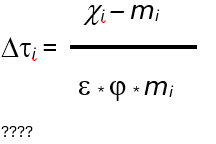
Boy, that looks really complicated, and it is found on the White House Office of the Trade Representative web site, so it must be real, and it must come from important economic studies. Right?
Second Flim Flam.
It looks so complicated and official that it must be an economics definition, no?
NO
Third Flim Flam
This is not an equation that is used in any economics or econometric analysis. It is made up by the White House for the express purpose of creating a numerical justification for the policy that had already been decided.
Let’s see if we can understand this.
What is Dti The Greek symbol , delta is used to indicate “change”, or “the difference”, and (tau) in this case refers to “tariff”, with the subscript “i” referring to any particular country. So, Dti can be translated as “the change in the tariffs that we will impose on a country compared to the tariffs we currently have in place.” The change will then be calculated based on the equation on the other side of the “=” sign.
What is Ci i? Again, the subscript “i” refers to the specific country being observed. C is the total value of goods that that the country exports to the US.
What is Mi? This is the total value of goods imported by that country from the US.
So, on the top of the equation we calculate the difference between what a specific country exports to the US versus what they import from the US. A country which exports more to the US than it imports from the US will have a positive number here, while a country which exports less to the US than they import from the US will have a negative number.
On the bottom of that equation are three numbers for that particular country. One is the Mi as above, the total value of goods imported by that country from the US.
In a pretty straight forward equation, say T=(X-M)/M, T is the percentage of change, say for calculating the percentage markup for a sale. So, if the equation did not have either or , the Tariff would be equal to the percentage difference between imports and exports, not influenced by any policies, taxes, financial issues or other things.
εi represents the “elasticity of imports with respect to import prices”.
Huh?
Well, this is an estimate of how much imports will change when prices change. So, if prices go up, in most cases imports will decrease. But how much it will change will be a guess. Those guesses are based on data from previous price changes, but the number varies quite a lot depending on a particular item. For example, if there are no substitutes available, then increases in prices will not change the volume of imports much, it will just increase the total cost or those imports, and the elasticity will be small. If, on the other hand, if there are other countries which can replace those items with lower-priced items made in those countries, then the cost of imports will rise less or may even remain constant. Likewise, if a US company can increase production AND sell them at a price below the now-higher price of imports, AND if the US consumer buy less imports as a result, then the elasticity will be large. Trying to sum up the effects of price changes on imports over the whole catalog of items imported from one country is extremely difficult, so the choice of a value for this “elasticity” is in many ways an arbitrary but educated guess.
Φi represents the “passthrough” from tariffs to import prices.
Again, Huh?
This number tries to measure how much businesses absorb the higher prices of imports or how much they pass on those increases to consumers. If businesses see a price increase of 50%, but only pass on half of those increases, swallowing the rest against their bottom line, then will be 0.5. If the businesses pass the entire increase on to the consumer, will be 1.0. The lower the number, the more the business absorbs the price increase and the lower the prices to the consumer.
SPOILER ALLERT:
These two terms, the elasticity and the passthrough, although they can have dramatic effects on the equation, the White House has set them up in their calculations so that they cancel each other! They set the elasticity at 4 and the passthrough at 0.25. Multiply 4 time 0.25 and you get 1. And dividing any number by 1 gives you the same number with which you started. In effect, for the calculations in this “complicated” equations, these two terms are just window dressing. They have no effect at all on the calculation of “tariffs”. This is explained below.
Wonk, Wonk
Looking back at the equation, we see that the way the current Administration has calculated the new change in tariffs.
The goal is to make change in tariffs) equal to zero. That would represent a balanced trade policy.
The approach, therefore, is to look at the difference between that country’s exports to the US and its imports from the US. On the surface this seems pretty fair. The problem arises when we look at the bottom of the equation. This modifies the differences between exports and imports.
The “elasticity” of imports is a guesstimate. The higher that guesstimate is, the lower the number becomes. Imagine, just for understanding the numbers, that the difference between X and M is 10. If the elasticity is 2, the number becomes 10/2 = 5. But if the elasticity is 5, the number becomes 10/5 = 2. So, depending on the number you choose for the “elasticity”, the total number for the tariff difference can dramatically change. Small changes in this number have a major effect on the overall number, and since the number is a guess to start with, any bias on that guess will provide a biassed estimate of the total number.
The same is true for the “passthrough” number. As this number changes it also effects the total number. If businesses absorb all of the price increases, then the passthrough is 1.0. If they absorb half, the passthrough is 0.5 and total number would double (divide 10 by 0.5 = 20 compared to dividing 10 by 1.0 = 10)
Let’s look at an example.
The EU.
According to the White House’s Office of the Trade Representative, in 2024 the US imported about $600 billions of goods from the EU and exported about $370 billions of goods.
Fourth Flim Flam
It actually makes no sense to look at exports and imports of “goods” alone, as the Office of the Trade Representative did to make these calculations. The US exports considerably more services to the EU than we import from the EU. For example, every time the EU pays an American consulting company like McKinsey or PWC, financial services fees, that is an export from the US to the EU. So, if we measure exports and imports of both goods and services, the gap on the top of the right side of the equation becomes much smaller.
The top of the equation, as calculated by the White House becomes 605-370 = 235.
Now we divide that number by three factors. First, we divide it by the value of imports (605)
235 / 605 = 0.39 or 39%
If we were to stop there, then the tariff rate from the US would need to be 39%.
What about elasticity?
In these calculations the elasticity measures how imports decrease in relationship to the increases in prices of imports. For example, if import prices rise 10%, and imports decrease by 10%, the elasticity if 1.0. If import prices rise 10% and imports decrease by half (5%), then the elasticity is 2.
The White House has chosen to use the number “4” for the elasticity. They claim that the historic number is closer to “2”, and that academic estimates approach “3-4”.
The choice of a number of 4, would mean that the estimate of a 10% increase in price would result in a 40% decrease in imports from Country i.
The higher number you choose, the smaller the overall tariff number will be. If you use 2, then the 39% tariff rate drops to 19.5%, if you use 4, then the tariff rate drops to 9.75%. The use of “4” is thus “generous”.
But there is one more term, the passthrough number. Remember, the more that a business absorbs the price increase, the lower this number. If a business absorbs 100% of the price increase, the passthrough is 1.0. If they absorb half of the price, then the number becomes 0.5.
The White House has chosen to use the number 0.25, meaning that their expectation is that businesses will absorb 25% of the price increases, passing on only 75%.
One of the mathematical curiosities of this approach is that the larger the amount of prices passed on to the consumer, the larger the overall number becomes. In the example above, a Passthrough of 0.25 would raise the 39% to 156%, and if ALL of the price increases were passed on to the consumer, the 39% would rise to INFINITY!
The “adjustment” factor in this equation is the product of the elasticity and the passthrough (multiplying one by the other). For the White House, they have fortunately chosen two numbers, “4” and “0.25”), that when multiplied together are “1”, so they pretty much negate each other.
This allows the Change in Tariff rate to be the difference between exports and imports divided by the exports.
Fifth Flim Flam.
Most deceptively, these numbers are then used as the Tariffs Imposed by Countries on the US.
The EU, which by all sources charges about 5% in tariffs for American imports, and which have somewhere around 1% in a tariff differential between it and the US, is now charged with imposing a 39% tariff on the US.