INFLATION GAP (PART 1)
This is the first in a group of essays on inflation.
I am not an economist, just an observer, and I hope that those of you who are economists will correct my errors and forgive my impertinence.
What I have been looking at is the relationship between economic globalism and economic nationalism, by comparing the inflation rates in the US to those in other countries.
A confession here.
As I have written in the past, I am a strong supporter of economic globalism. Although globalization of economies began with the Industrial Revolution, it truly accelerated after WWII. I believe that the integration of producers, consumers, and markets since that time is the single greatest source of world peace for the past 80 years. I am concerned about the current movement towards self-sourcing economies, as historically this has led to the need to acquire, by force, if necessary, other countries whose resources are needed internally. For example, if the US follows the path to economic isolationism we may need natural resources that we don’t have and we might have to take over Greenland, by force if necessary, or if Canada has more oil, gas, and lumber than us, we might need to annex it too.
In order to assess these contrasting philosophies, I believe it is necessary to eliminate political posturing over inflation measurement and simply observe the actual numbers in the context of the entire worldwide economies.
WHAT IS INFLATION?
First things first. Inflation is not a policy. It cannot be legislated. It cannot be enacted. Inflation is a measurement of how much your cost of living has risen over the past year.
The only way the government can “stop” inflation is to enact price controls on all goods and services. If companies cannot raise or lower their prices, and all costs that you incur remain constant over a year, there will be no inflation.
WHAT IS THE STRATEGY BEHIND THE CURRENT ECONOMIC PLAN?
As I understand it, the current administration’s plan to combat inflation is focused primarily on goods. The approach appears to have 3 legs.
The first leg is to raise the cost of importing goods. The intention is to provide domestic manufacturers some buffer room to be able to compete with the prices offered from foreign suppliers. By imposing tariffs, domestic producers have some runway to build factories for products that are currently not made here.
The second leg is to reduce energy costs by increasing the availability of domestic fossil fuels, which would result in a decrease in the cost of those resources and the electricity produced using them. Decreased energy costs will decrease the manufacturing costs of goods.
The third leg is eliminating regulations on manufacturers, regulations that require either measurements and paperwork, or that require remedial equipment, processes, and other measures, the sum total of which increases costs and reduces overall efficiencies. The elimination of these requirements would allow a decrease in the costs of manufacturing goods.
Regarding the effects on inflation, the increases in costs created by tariffs are seen as a one-time step-up in costs that will quickly plateau. That increase is the pain necessary to reorganize goods production in this country and the short-term increase in inflation will quickly reverse and result in long-term control of inflation.
BUT WHAT ABOUT SERVICES?
This strategy does not easily apply to services. Economic services include things like financial, consulting, legal, movies, haircuts, massages, tutoring, medical exams, marketing, accounting, travel consulting, healthcare, education, transportation, waste management, public utilities, public safety, concerts, and sports.
These services are not “manufactured” so they are not as vulnerable to tariffs, energy, or regulatory relief for controlling costs. And since services account for over 70% of the US economy, controlling inflation by controlling the costs of goods is extremely tempered.
There are other risks/benefits to imposing tariffs on imported goods, but I am focused here strictly on inflation. For example, imposing tariffs on imports may stimulate foreign manufacturers to relocate their facilities to this country in order to avoid those tariffs. Should this occur, it may reduce some of the prices of those goods but generally can be expected to parallel the economic effects on domestically owned producers. This example will have little direct impacts on inflation, so I have not included them here.
FLAWS IN THE STRATEGY
There are also some potential flaws in the logic of the current administration’s plans to lower inflation.
With regards to the first leg, the assumption is that tariffs will provide a window of opportunity for domestic companies to better compete with those imported items. However, the uncertainty of political vicissitudes that might result in the annulment of those tariffs in the next few years has already produced apprehension within domestic companies concerning their plans to build new plants. Delays in initiating plans or simply accepting new pricing realities are pressures that work against this strategy.
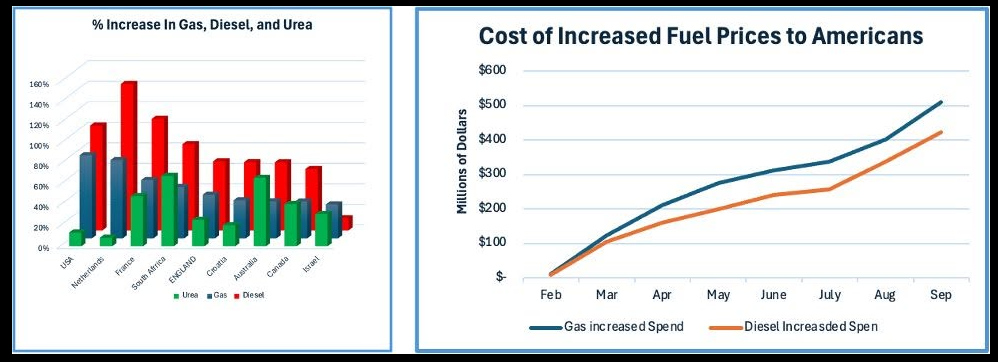
With regards to energy, the US has already reached a level where it is exporting energy, so increasing the supplies internally may not actually result in decreased energy costs. Also, many of the fossil fuel extraction methods REQUIRE prices of at least $50 per barrel before they can be profitable. Finally, most fossil fuel companies are multi-national. Their sources are also scattered across the globe. Domestically extracted fuels are only one component of their overall product mix and the prices they place on their materials are driven by international markets, not domestic markets. So, increasing US production does not necessarily mean a decrease in US fuel prices.
With regards to regulation, this is also subject to the caprices of political pressure and public sentiment. The potential reintroduction of new regulations in the short-range future is not conducive to long-term business planning. Also, potential legal actions related to actions of companies even if those actions fall within the strict interpretation of regulations established by Presidential Order will still restrain activities by domestic companies which have to answer to stockholders and local citizenry.
If the current Administration’s strategy fails, then the tariffs will result in a step-up in prices without a concurrent increase in domestic manufacturing.
In my next note I will look at how costs experienced by manufacturers of goods pressure increased prices.